
The Internet search giant, Google has done something unthinkable and uncharacteristic of its untarnished reputation. It has made use of a specific programming code written to monitor iPhone behavior, thereby circumventing the Apple iPhone’s default privacy settings.
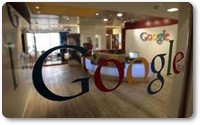
Apple’s iPhone privacy settings are so secure that it usually prevents companies from using the ‘cookies’ to track the behavior of its loyal customers. These cookies can routinely follow user behavior and make use of this knowledge for business purposes. However, this time around, Google has out stepped these privacy settings and invaded the private space of iPhone users by a specific coding that made the Safari browser to behave differently.
This news, put up by the Wall Street Journal has made Google to modify its practices, while making its stand clear that it had never stalked on any personal data. Google officials claim that their practices have been ‘mischaracterized’ and they never meant to pry on any of the iPhone users.
Apple officials, on the other hand, have jolted upright and are working with fervor to put a complete stop to the circumvention of Safari’s privacy settings. They will soon find an effective solution to combat with the invasion of search engines into their Safari browser.
Google’s head of communications and public policy, Rachel Whetstone was quick to deny the rumors. She said the Wall Street Journal had mischaracterized Google’s actions and that they had used previously known user functionalities of the Safari browser to obtain features of signed-in iPhone users. She explicitly made it clear that the advertising cookies were never used to collect personal information of the iPhone users.
The breach was unearthed by a researcher from Stanford University, Jonathan Mayer who found that 23 of the top 100 websites had installed a tracking code on an iPhone browser. When the iPhone was activated, the code allowed easy tracking of user behavior of net surfers by default. This could be used to an advantage by advertisers and companies. The cookies do not collect any personal information at any point in time. Since Safari is the only browser available on Apple’s iPhone, a specific programming code, written for this browser did the trick and allowed Google to track iPhone users’ behavior to its advantage. Google’s code hoodwinked safari’s privacy settings into believing that an invisible form was being submitted and thus allowed tracking by Google. These could come along with simple buttons such as the ‘Like’ button or the +1 or -1 buttons.
Although Google has been quick in defending its action, the search giant has been pulled up by the European Union and has been told in no uncertain terms to revise its privacy policies. Other advertising firms such as Vibrant Media, Media Innovation Group and PointRoll were also found indulging in such practices. Now Google has promised to change its privacy settings into a more transparent one and offer a simplified version, in the form of one single document.
|
|
Note : You will find a confirmation link in your inbox or junk folderIf You Enjoyed This Post Please Take 5 Seconds To Share It.